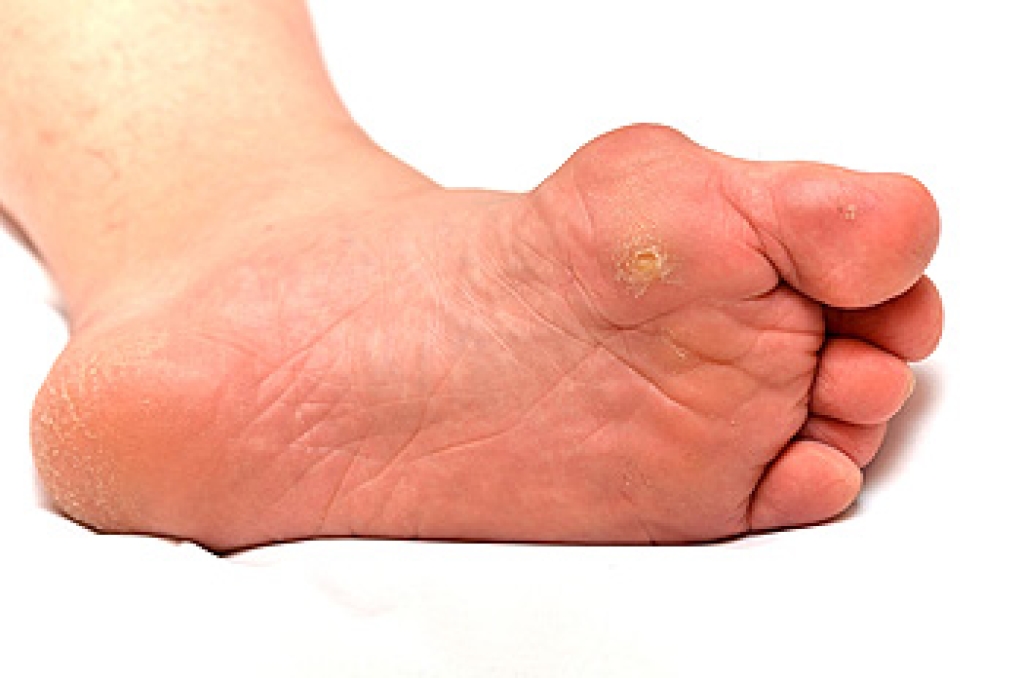
Complications From Untreated Corns on the Feet

If left untreated, corns on the feet can lead to various complications. Corns are thickened areas of skin caused by friction and pressure, which can become painful and result in infections. This can happen when bacteria enter through cracks in the skin or if the corn is cut or punctured. Infections can lead to more serious problems, including septic arthritis or infection of nearby bone tissue. Corns left untreated can also trigger severe pain, causing individuals to alter their posture. This can affect how pressure is distributed while walking. Individuals with diabetes may have reduced sensation in their feet due to nerve damage. This means they might not notice small cuts or corns. If corns are left untreated in people with diabetes, it can lead to complications like those previously mentioned, in addition to tissue death known as gangrene. To prevent these complications, it is suggested that you make an appointment with a podiatrist to seek treatment if corns become painful. This foot expert can provide proper care to help avoid serious complications from corns.

If you have any concerns regarding your feet and ankles, contact one of our podiatrists of Family Foot Health Center. Our doctors will treat your foot and ankle needs.

Corns: What Are They? and How Do You Get Rid of Them?
Corns can be described as areas of the skin that have thickened to the point of becoming painful or irritating. They are often layers and layers of the skin that have become dry and rough, and are normally smaller than calluses.

Ways to Prevent Corns
There are many ways to get rid of painful corns such as wearing:

  • Well-fitting socks
  • Comfortable shoes that are not tight around your foot
  • Shoes that offer support

Treating Corns
Treatment of corns involves removing the dead skin that has built up in the specific area of the foot. Consult with Our doctors to determine the best treatment option for your case of corns.

If you have any questions, please feel free to contact our office located in Rogers and Berryville, AR . We offer the newest diagnostic and treatment technologies for all your foot care needs.
Read more about Corns: What Are They, and How Do You Get Rid of Them

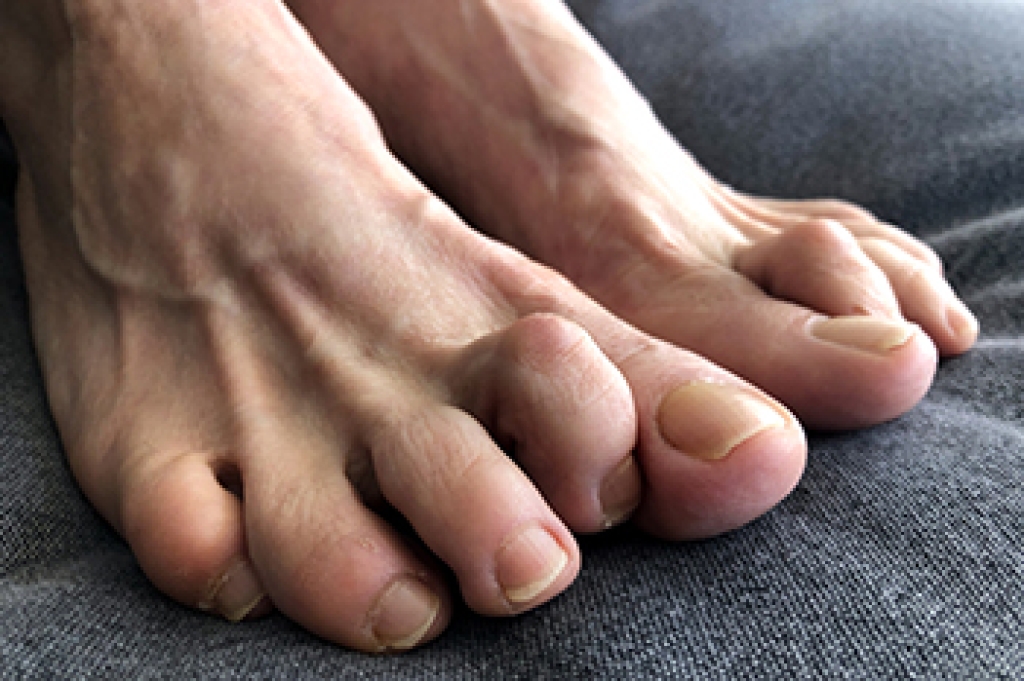
Managing Hammertoe

If you have ever experienced pain or discomfort or unusual changes in the shape of your toes, you may be dealing with a foot condition known as hammertoe. This deformity occurs when one or more toe joints become bent, resembling the shape of a hammer. Hammertoe can cause other foot conditions, such as calluses or corns where your toe rubs against the inside of the shoe. Symptoms may include pain while wearing shoes, swelling, redness, or difficulty straightening your toe. The good news is that there are effective treatments to alleviate the discomfort caused by hammertoe. Start by choosing footwear with a soft, deep, and roomy toe box to reduce pressure on your toes. Shoe Inserts, cushioning pads, or taping can move the toe and ease the pain. Incorporating simple exercises into your daily routine can also help. Try toe crunches by scrunching a towel with your toes while keeping your heel planted. Or, gently stretch your toes by pulling them toward you using your hands or a towel. In severe cases, a surgical solution may be necessary to release the tendon that is keeping the toe curled up. If you are afflicted with hammertoe, it is suggested that you seek the help of a podiatrist for an exam and treatment options.

Hammertoe

Hammertoes can be a painful condition to live with. For more information, contact one of our podiatrists from Family Foot Health Center. Our doctors will answer any of your foot- and ankle-related questions.

Hammertoe is a foot deformity that affects the joints of the second, third, fourth, or fifth toes of your feet. It is a painful foot condition in which these toes curl and arch up, which can often lead to pain when wearing footwear.

Symptoms

  • Pain in the affected toes
  • Development of corns or calluses due to friction
  • Inflammation
  • Redness
  • Contracture of the toes

Causes

Genetics – People who are genetically predisposed to hammertoe are often more susceptible

Arthritis – Because arthritis affects the joints in your toes, further deformities stemming from arthritis can occur

Trauma – Direct trauma to the toes could potentially lead to hammertoe

Ill-fitting shoes – Undue pressure on the front of the toes from ill-fitting shoes can potentially lead to the development of hammertoe

Treatment

Orthotics – Custom made inserts can be used to help relieve pressure placed on the toes and therefore relieve some of the pain associated with it

Medications – Oral medications such as anti-inflammatories or NSAIDs could be used to treat the pain and inflammation hammertoes causes. Injections of corticosteroids are also sometimes used

Surgery – In more severe cases where the hammertoes have become more rigid, foot surgery is a potential option

If you have any questions, please feel free to contact our office located in Rogers and Berryville, AR . We offer the newest diagnostic and treatment technologies for all your foot care needs.

Read more about What Are Hammertoes?

We Can Treat Your Foot or Ankle Pain

Foot or ankle pain can negatively affect your day-to-day life and can occur due to several different conditions. Pain can also be an indicator of a more serious underlying condition, which is why you should seek professional help as soon as you notice any abnormalities in your feet.

The Benefits of Strengthening the Foot Muscles

When it comes to fitness, the majority of people focus on sculpting their biceps or toning their abs, often overlooking the feet, which are one of the most critical parts of the body. Foot muscle strengthening, however, offers numerous benefits that extend beyond just your feet. Strong foot muscles can enhance your balance and stability, reducing the risk of falls and injuries, in addition to contributing to better overall posture. When your feet are well-supported, it positively affects your alignment from the ground up. Strengthening the foot's arches and intrinsic muscles can also help to alleviate common foot problems such as plantar fasciitis and flat feet. Many athletes have found that stronger feet provide a solid foundation, and can improve their agility, speed, and power. Foot muscle strengthening can prevent overuse injuries that often occur due to weak or imbalanced foot muscles. Incorporating exercises consisting of toe scrunches, calf raises, and foot stretches into your routine can help you reap these benefits and maintain healthy, strong feet. If you would like to learn about how to perform specific foot stretches, it is suggested that you speak with a podiatrist who can provide you with the information you are seeking.

Exercising your feet regularly with the proper foot wear is a great way to prevent injuries and build strength. If you have any concerns about your feet, contact one of our podiatrists from Family Foot Health Center. Our doctors can provide the care you need to keep you pain-free and on your feet.

Exercise for Your Feet

Exercise for your feet can help you gain strength, mobility and flexibility in your feet. They say that strengthening your feet can be just as rewarding as strengthening another part of the body. Your feet are very important, and we often forget about them in our daily tasks. But it is because of our feet that are we able to get going and do what we need to. For those of us fortunate enough to not have any foot problems, it is an important gesture to take care of them to ensure good health in the long run.

Some foot health exercises can include ankle pumps, tip-toeing, toe rises, lifting off the floor doing reps and sets, and flexing the toes. It is best to speak with Our doctors to determine an appropriate regimen for your needs. Everyone’s needs and bodies are different, and the activities required to maintain strength in the feet vary from individual to individual. 

Once you get into a routine of doing regular exercise, you may notice a difference in your feet and how strong they may become.

If you have any questions, please feel free to contact our office located in Rogers and Berryville, AR . We offer the newest diagnostic and treatment technologies for all your foot care needs.

Read more about Exercise for Your Feet

Amniotic Band Syndrome and Infant’s Feet

Amniotic band syndrome is also known as congenital constriction ring or constriction band syndrome. It is a rare condition encompassing various abnormalities. During pregnancy, damage to the lining of the amniotic sac leads to the formation of string-like structures called strands, which entangle the developing fetus and restrict blood flow, resulting in various birth abnormalities. This can often affect the arms, legs, and feet. The exact cause of this syndrome is unknown, but it typically occurs when the amniotic sac lining tears during pregnancy. It can be due to random factors or specific environmental influences, such as abdominal trauma or certain medical procedures. Symptoms can vary widely, with some babies born with minor deformities and others with severe and life-threatening defects, including limb malformations. Diagnosis is often made at birth, as amniotic bands are challenging to detect on regular ultrasounds. Treatment varies based on severity and may include supportive care, surgery, and rehabilitative therapy to help affected infants lead healthy lives. If you have a child born with amniotic band syndrome and their feet are affected, it is strongly suggested that you make an appointment with a podiatrist and begin treatment as early as possible.

Congenital foot problems require immediate attention to avoid future complications. If you have any concerns, contact one of our podiatrists of Family Foot Health Center. Our doctors can provide the care you need to keep you pain-free and on your feet.

Congenital foot problems are deformities affecting the feet, toes, and/or ankles that children are born with. Some of these conditions have a genetic cause while others just happen. Some specific foot ailments that children may be born with include clubfeet, polydactyly/macrodactyly, and cleft foot. There are several other foot anomalies that can occur congenitally. What all of these conditions have in common is that a child may experience difficulty walking or performing everyday activities, as well as trouble finding footwear that fits their foot deformity. Some of these conditions are more serious than others. Consulting with a podiatrist as early as possible will help in properly diagnosing a child’s foot condition while getting the necessary treatment underway.

What are Causes of Congenital Foot Problem?

A congenital foot problem is one that happens to a child at birth. These conditions can be caused by a genetic predisposition, developmental or positional abnormalities during gestation, or with no known cause.

What are Symptoms of Congenital Foot Problems?

Symptoms vary by the congenital condition. Symptoms may consist of the following:

  • Clubfoot, where tendons are shortened, bones are shaped differently, and the Achilles tendon is tight, causing the foot to point in and down. It is also possible for the soles of the feet to face each other.
  • Polydactyly, which usually consists of a nubbin or small lump of tissue without a bone, a toe that is partially formed but has no joints, or an extra toe.
  • Vertical talus, where the talus bone forms in the wrong position causing other bones in the foot to line up improperly, the front of the foot to point up, and the bottom of the foot to stiffen, with no arch, and to curve out.
  • Tarsal coalition, when there is an abnormal connection of two or more bones in the foot leading to severe, rigid flatfoot.
  • Cleft foot, where there are missing toes, a V-shaped cleft, and other anatomical differences.
  • Macrodactyly, when the toes are abnormally large due to overgrowth of the underlying bone or soft tissue.

Treatment and Prevention

While there is nothing one can do to prevent congenital foot problems, raising awareness and receiving neonatal screenings are important. Early detection by taking your child to a podiatrist leads to the best outcome possible.

If you have any questions, please feel free to contact our office located in Rogers and Berryville, AR . We offer the newest diagnostic and treatment technologies for all your foot care needs.

Read more about Congenital Foot Problems