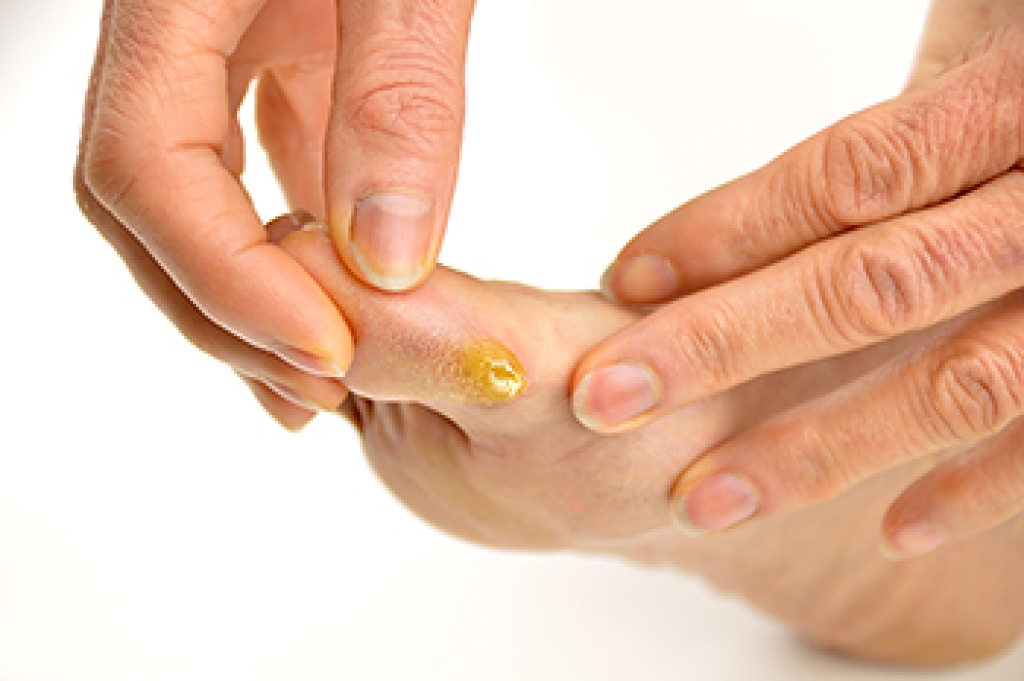
Athletes place repeated pressure on their feet during running, jumping, and quick direction changes. Over time, this constant friction and stress can cause the skin to thicken in certain areas. Corns and calluses are the body’s natural response to protect the skin from ongoing pressure. Calluses usually appear as larger areas of thickened skin on the ball of the foot or heel, while corns are smaller and often form on the tops or sides of toes where shoes rub. Although this thickened skin may begin as a protective response, it can become painful if it continues to build up. Wearing poorly fitting athletic shoes, tight cleats, or foot structure differences may increase pressure on certain parts of the foot. Proper footwear, protective padding, and routine foot care may help reduce irritation. When corns or calluses become painful or keep returning, it is suggested that you see a podiatrist for an evaluation and appropriate treatment.
If you have any concerns regarding your feet and ankles, contact one of our podiatrists of Family Foot Health Center. Our doctors will treat your foot and ankle needs.
Corns: What Are They? and How Do You Get Rid of Them?
Corns can be described as areas of the skin that have thickened to the point of becoming painful or irritating. They are often layers and layers of the skin that have become dry and rough, and are normally smaller than calluses.
Ways to Prevent Corns
There are many ways to get rid of painful corns such as wearing:
- Well-fitting socks
- Comfortable shoes that are not tight around your foot
- Shoes that offer support
Treating Corns
Treatment of corns involves removing the dead skin that has built up in the specific area of the foot. Consult with Our doctors to determine the best treatment option for your case of corns.
If you have any questions, please feel free to contact our office located in Rogers and Berryville, AR . We offer the newest diagnostic and treatment technologies for all your foot care needs.
